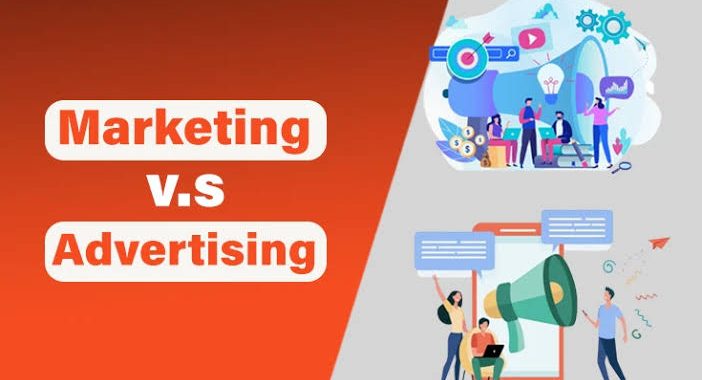
Content Marketing vs Advertising: What’s the Real Difference?

Content Marketing vs Advertising: What’s the Real Difference?

Have you ever scrolled past a loud, obvious ad without a second thought, but stopped to read an interesting article or watch a genuinely helpful video — only to realize later it was posted by a brand? That reaction, that difference in how you responded, is the entire distinction between content marketing and advertising.
We’ve covered digital marketing basics, SEO, paid versus organic growth, and the marketing funnel. Now let’s clear up one of the most confused pairs of terms in the entire industry.

What Is Content Marketing?
Content marketing is the practice of creating genuinely valuable, relevant, or entertaining material — blog posts, videos, guides, podcasts, infographics — with the goal of attracting and building trust with an audience, rather than directly asking them to buy something.
The sale isn’t the first move. The value is. Trust and buying decisions follow naturally, often later.

What Is Advertising?
Advertising is a direct, paid message designed to promote a product or service, usually with a clear and immediate call-to-action, like “Buy now,” “Sign up today,” or “Limited time offer.”
Unlike content marketing, advertising doesn’t try to slowly earn attention — it buys it directly, and usually asks for something in return almost immediately.

The Core Difference, Explained Simply
Imagine two people at a party.
One person spends the evening genuinely getting to know others — asking questions, sharing helpful advice, being interesting to talk to. By the end of the night, people like them and want to stay in touch. That’s content marketing — value first, relationship building, sale later (if at all, directly).
The other person walks around handing out business cards to everyone, repeating “buy my product” to anyone who’ll listen. It might work on a few people who happened to need exactly that product right then — but most people will politely step away. That’s advertising — direct, immediate, but often less personally engaging.
Neither approach is wrong at a party — or in marketing. They just create very different types of relationships, at very different speeds.
Comparing the Two, Side by Side
Purpose
Content marketing aims to inform, entertain, or educate. The goal of advertising is to actively market and sell.
Timeframe
Content marketing plays a long game, often taking weeks or months to build trust and traffic. Advertising delivers instant visibility the moment it goes live.
Cost structure :

Content marketing costs,time and creative effort, without a direct per-view payment. Advertising typically involves paying for every impression, click, or view.
Trust factor
Content marketing tends to build deeper trust, since it doesn’t feel like a hard sell. Since the intention to sell is clear and direct, advertising may seem more transactional.
Longevity
A great piece of content marketing, like a well-written blog post, can keep attracting an audience for years. An ad campaign stops delivering the moment the budget runs out.
Why This Confusion Happens So Often
Many beginners assume content marketing and advertising are competing strategies, when in reality, they’re simply different tools solving different problems.
Advertising is fantastic when you need quick visibility, are launching something time-sensitive, or want to directly reach a specific audience you’ve already identified.
Content marketing is fantastic when you’re building a long-term brand, want to earn trust before asking for a sale, or are trying to educate a market that doesn’t fully understand your product yet.
The confusion mostly comes from the fact that content can become advertising too — for example, a sponsored blog post or a paid influencer video blends both approaches into one.
A Real-World Example, Side by Side
Let’s return to the candle brand one final time, comparing how the same product might be marketed through each approach.
Through content marketing: The brand publishes a genuinely useful blog post titled “5 Signs You’re Using the Wrong Candle for Your Bedroom,” subtly mentioning their own products as examples, without a direct sales pitch. Readers find it helpful, trust builds, and some naturally explore the brand’s shop afterward.
Through advertising: The same brand runs a direct Instagram ad showing the candle with the text: “Cozy your home this winter — 20% off today only.” It’s straightforward, immediate, and intended to swiftly convert individuals who are already inclined to make a purchase.
Notice neither approach is better — they’re simply built for different moments in a customer’s journey, echoing the funnel stages we covered in the last post.
When Should You Use Which?
Choose content marketing when:
You’re building long-term brand trust and authority.
Your audience doesn’t fully understand your product yet and needs education first.
You have more time than budget to invest.
Choose advertising when:
You need visibility or sales quickly.
You’re testing a new offer or message and want fast feedback.
You already have proven, high-converting content or products you want to amplify.
The Smartest Approach: Blend Both
Just like paid and organic marketing work best together, content marketing and advertising often achieve more when combined rather than treated as rivals.
A common, effective approach: create genuinely valuable content first, then use a small advertising budget to boost that content’s reach to a wider, relevant audience — combining the deep trust of content with the speed of advertising.

Common Myths Worth Clearing Up
Posting without a clear purpose or audience in mind rarely builds meaningful traction. Good content marketing is just as strategic as advertising, simply slower to show results.
“Advertising is only for big brands with big budgets.”
Even a small, well-targeted ad budget can meaningfully move the needle for a small business, especially when paired with genuinely strong content behind it.
“You have to choose one as your permanent identity.”
Nearly every successful brand uses both, adjusting the balance depending on their current goals, budget, and stage of growth.
Wrapping Up This Series
Over these five posts, you’ve now walked through the essential foundations of digital marketing — what it is, how SEO helps you get discovered, the difference between paid and organic growth, how the marketing funnel guides a stranger toward becoming a customer, and finally, how content marketing and advertising each play their own distinct role in that journey.
Together, these fundamentals form the backbone of nearly every successful digital strategy you’ll come across — no matter how advanced or complex it eventually seems on the surface. Understanding these basics deeply is what separates people who just follow trends from those who genuinely understand why those trends work in the first place.

paid vs Organic Marketing : Where should Beginners Starts

Paid vs Organic Marketing: Where Should Beginners Start?

If you’ve ever felt torn between “should I run ads?” and “should I just focus on growing naturally?” — you’re asking one of the most common questions in digital marketing. And the honest answer isn’t as simple as picking a side. It’s about understanding what each approach actually does, and when to lean on which one.
In our last two posts, we covered what digital marketing is and how SEO helps you get found organically. Today, we’re addressing the debate that trips up nearly every beginner: paid marketing versus organic marketing.
What Do “Paid” and “Organic” Actually Mean?
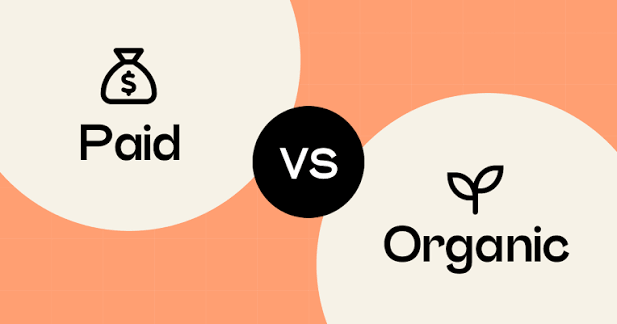
Organic marketing refers to any traffic or attention you earn without directly paying for placement — think SEO, social media posts, word of mouth, or content marketing. It grows naturally over time, built on relevance and trust.
Paid marketing refers to traffic or visibility you buy directly — search ads, social media ads, sponsored posts, or influencer partnerships you pay for. The moment your budget stops, so does the visibility.
Neither one is inherently “better.” They simply serve different purposes, and the smartest marketers use both, at different stages, for different goals.
The Core Difference: Speed vs Sustainability
Here’s the simplest way to picture it:

Paid marketing is like renting a shop in a busy mall. The moment you pay rent, people walk past and notice you. The moment you stop paying, that visibility disappears completely.
Organic marketing is like building your own storefront on a street corner. It takes longer to construct, and foot traffic starts slow — but once it’s built and people know it’s there, it keeps bringing customers back, month after month, without an ongoing rental bill.
Neither is wrong. A brand-new business often needs the mall’s instant foot traffic to survive early on, while relying purely on organic growth alone can feel painfully slow. But over years, that self-owned storefront often becomes the more valuable, cost-efficient asset.
Paid Marketing: The Fast Lane
Paid marketing includes things like:
Google Ads (search and display)
Instagram and Facebook ads
YouTube pre-roll ads
Sponsored influencer posts
LinkedIn sponsored content
The biggest advantage of paid marketing is speed. You can launch a campaign this afternoon and start seeing traffic within hours. It’s also highly targeted — you can choose exactly who sees your ad, based on location, age, interests, or even browsing behavior.
The tradeoff is that it’s a rented spotlight. Stop paying, and your visibility vanishes overnight. It can also get expensive quickly, especially in competitive industries where many businesses are bidding for the same audience’s attention.

Organic Marketing: The Long Game
Organic marketing includes things like:
SEO-optimized blog content
Social media posts and community engagement
Email newsletters built from genuine subscribers
Word-of-mouth and referral growth
The biggest advantage here is durability. A well-written blog post or a genuinely useful video can keep attracting visitors for years without additional spending. It also tends to build deeper trust, since people know you weren’t paying to be in front of them — you earned that spot.
The tradeoff is time. Organic growth rarely happens overnight. It can take weeks or months of consistent effort before you start seeing meaningful traction.
A Simple Way to Decide Where to Start
Ask yourself these three questions:
1. Do I need results immediately, or can I invest in the long term?
If you’re launching a time-sensitive offer or a new product that needs visibility right now, paid marketing gets you there faster. If you’re building a brand meant to last years, organic deserves serious early investment.
2. What’s my budget?
If your budget is tight, organic marketing lets you grow using time and effort instead of cash. If you have some budget to test with, even a small, well-targeted ad spend can help you learn quickly what resonates with your audience.
3. Am I trying to test an idea, or scale a proven one?
Paid ads are excellent for quickly testing which message, image, or offer performs best. Once you know what works, organic content can help you scale that same message more sustainably.
The Beginner-Friendly Approach: Start Organic, Use Paid to Accelerate
For most beginners with limited budgets, a hybrid mindset works best

Step 1: Start building organic assets early — a blog, a social media presence, an email list. These take time to grow, so the earlier you start, the better.
Step 2: Once you notice which content or offers naturally perform well organically, put a small paid budget behind those proven winners to accelerate their reach.
Step 3: Reinvest what you learn from paid campaigns — which headlines work, which images get clicks — back into your organic content strategy.
This way, paid and organic aren’t competing strategies. They’re feeding each other.
A Real-World Example
Let’s return to our handmade candle business one more time. Early on, with a small budget, the owner starts a blog covering home fragrance tips — pure organic content, slow but free.
A few months in, one post about “cozy autumn scents” starts getting noticeable traffic on its own. Seeing this early signal, she puts a small ad budget behind that same topic, promoting it to a wider, similar audience. The ad performs well because the organic content already proved people cared about it.
That’s the paid-organic loop working exactly as intended — each one making the other stronger.
Common Myths Worth Clearing Up

“Paid ads guarantee sales.”
Ads bring visibility and clicks, not automatic sales. Without a good offer, website, or clear message, paid traffic can disappear without converting into customers.
“Organic marketing is completely free.”
Organic isn’t free — it costs time, consistency, and effort, which are resources too. It’s “unpaid” in the direct financial sense, not effortless.
“You have to pick one and stick with it forever.”
Most successful brands blend both, adjusting the ratio depending on their goals, season, or budget at any given time.
What’s Next?
Whether someone finds you through a paid ad or an organic blog post, the real work has only just begun the moment they land on your page. That’s where the idea of a marketing funnel comes in — the journey that turns a curious stranger into a loyal customer. That’s exactly what we’ll unpack in the next post.

What Is Digital Marketing? A Beginner’s Roadmap for 2026

What Is Digital Marketing? A Beginner’s Roadmap for 2026

Picture this: you open your phone, scroll through Instagram, watch a YouTube video, check your email, and maybe order something online — all before you’ve even had your morning coffee. Somewhere in that fifteen-minute window, a brand tried to catch your attention at least half a dozen times. That, in the simplest possible terms, is digital marketing in action.

If you’ve ever wondered what digital marketing actually means beyond the buzzword, you’re in the right place. This guide breaks it down in plain language, no confusing jargon, no assumptions that you already know what a “funnel” or a “CTR” is. By the end, you’ll understand exactly what digital marketing is, why it matters, and how all its moving parts fit together.

So, What Exactly Is Digital Marketing?

Digital marketing is the practice of promoting products, services, or brands using digital channels — think websites, search engines, social media, email, and mobile apps — instead of traditional methods like TV ads, billboards, or newspaper listings.

In short: it’s marketing that happens wherever people spend time on a screen.

The goal hasn’t changed from traditional marketing — you still want to reach the right people, build trust, and eventually turn them into paying customers. What’s changed is the battlefield. Fifty years ago, a business fought for attention on a printed page. Today, it fights for attention in a crowded, scrolling, notification-filled digital space.

Why Digital Marketing Took Over

A few decades ago, if a small bakery wanted to advertise, its options were limited — maybe a local newspaper ad or a flyer on a community board. Reach was small, and results were nearly impossible to measure.

Now that same bakery can post a reel showing fresh croissants coming out of the oven, run a five-dollar ad targeting people within a three-kilometer radius, and track exactly how many people saw it, clicked it, and walked through the door. That’s the real power shift: digital marketing didn’t just move marketing online — it made marketing measurable, targeted, and accessible to businesses of every size.

Here’s why it has become the dominant form of marketing:

It reaches people where they already are. People aren’t waiting for the evening news to find out about new products; they’re already online, scrolling.

It’s measurable, down to the click. You can see exactly how many people viewed your ad, clicked your link, or abandoned their cart — something traditional billboards could never tell you.

It levels the playing field. A one-person business with a smart strategy can outperform a big brand with a bloated budget, simply by being sharper and more relevant online.

It’s flexible and fast. A traditional ad campaign might take weeks to launch. A digital campaign can go live in an afternoon — and be tweaked the moment it isn’t working.

The Core Pillars of Digital Marketing

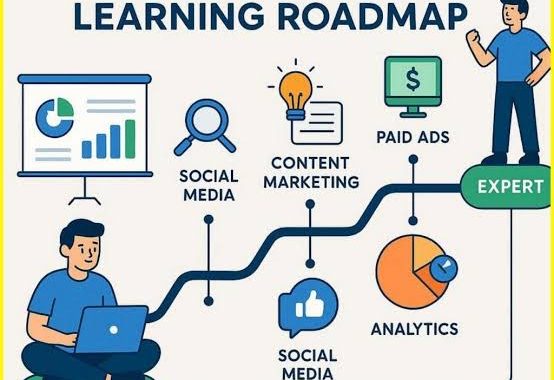
Digital marketing isn’t one single skill — it’s an umbrella term covering several connected disciplines. Think of it like a toolbox: each tool does a different job, but together they build the full picture.

1. Search Engine Optimization (SEO)

This is the practice of improving your website so it shows up naturally when people search on Google or other search engines. If someone types “best bakery near me” and your website appears on page one, that’s SEO doing its job quietly in the background.

2. Content Marketing

This is about creating valuable, useful, or entertaining content — blog posts, videos, infographics — that draws people in without directly shouting “buy now.” It builds trust first and sales later. This very blog post you’re reading is content marketing.

3. Social Media Marketing

Using platforms like Instagram, LinkedIn, YouTube, or Pinterest to build a community, share updates, and engage directly with your audience through comments, stories, and posts.

4. Pay-Per-Click Advertising (PPC)

Paid ads that appear on search engines or social platforms, where you pay only when someone actually clicks. It’s a fast way to get visibility while your organic efforts (like SEO) grow in the background.

5. Email Marketing

Despite being one of the oldest digital tools, email remains one of the highest-return channels available. It’s how businesses nurture relationships directly, without depending on an algorithm’s mood.

6. Affiliate and Influencer Marketing

Partnering with other creators or websites who promote your product to their own audience, usually in exchange for a commission or fee.

7. Analytics and Data

The behind-the-scenes engine of digital marketing. Every click, scroll, and purchase leaves a data trail, and analyzing that trail is how marketers know what’s working and what needs fixing.

Each of these pillars can be its own career path — but understanding how they connect is what separates a good marketer from a great one.

How Digital Marketing Actually Works: A Simple Example

Let’s say you run an online store selling handmade candles. Here’s how digital marketing might guide a single customer’s journey:

  1. Awareness — She discovers your candle through an Instagram reel or a Google search for “relaxing home fragrance ideas.”
  2. Interest — She clicks through to your blog post about the benefits of soy wax candles, and now recognizes your brand name.
  3. Consideration — She signs up for your email list after seeing a small discount pop-up.
  4. Conversion — A well-timed email with a limited offer convinces her to make her first purchase.
  5. Loyalty — After a great unboxing experience, she follows you on social media and becomes a repeat customer — maybe even tells a friend.

Every step in that journey involved a different digital marketing tool working together. That’s the real magic of digital marketing: it’s rarely just one tactic — it’s a coordinated system.

Common Myths About Digital Marketing

“It’s only for big companies with big budgets.” False. Some of the most effective digital campaigns come from small, local businesses that understand their audience better than a huge corporation ever could.

“Posting on social media is the whole strategy.” Social media is one piece, not the entire puzzle. Without SEO, email, or a clear website, posts alone rarely convert into long-term customers.

“It’s all about going viral.” Virality is a bonus, not a strategy. Sustainable growth usually comes from consistency, not a single lucky post.

Why This Matters for You

Whether you’re a business owner trying to grow, a student exploring career options, or simply someone curious about how brands reach you online, understanding digital marketing gives you a lens into how the modern world runs. Nearly every business — from a neighborhood tailor to a global tech company — now depends on some form of digital marketing to survive and grow.

And the best part? You don’t need a marketing degree to get started. You need curiosity, a willingness to experiment, and a basic understanding of the tools available — which is exactly what this blog series is here to build with you, one topic at a time.

What’s Next?

Now that you understand what digital marketing is at its core, the natural next question is: how do people actually get found on Google? That’s where SEO comes in — and it’s exactly what we’ll break down, in equally simple terms, in the next post.

Stay tuned, and welcome to the world of digital marketing.

Google Algorithm Update: What You Need to Know

Google Algorithm Update: What You Need to Know

Google regularly updates its search algorithm to improve the quality of search results and provide users with the most relevant information. While major updates often make headlines, Google also rolls out smaller changes throughout the year. For website owners, marketers, and content creators, understanding these updates is essential for maintaining and improving search rankings.
The primary focus of recent Google algorithm updates is rewarding high-quality, user-focused content. Websites that provide accurate, original, and helpful information are more likely to perform well in search results. On the other hand, pages with thin content, keyword stuffing, misleading information, or poor user experience may see a decline in rankings.

To stay ahead, focus on creating valuable content that answers users' questions naturally. Optimize your website for fast loading speeds, mobile responsiveness, and easy navigation. Regularly update older articles with fresh information, credible sources, and improved readability. Building trust through expert insights and authentic content is more effective than relying on outdated SEO shortcuts.

It's also important to monitor your website's performance using tools like Google Search Console and analytics platforms. If you notice ranking changes after an update, review your content quality, technical SEO, and user experience before making major adjustments.

Google's algorithm will continue to evolve, but one principle remains constant: prioritize your audience over search engines. By publishing original, informative, and engaging content, your website is more likely to achieve sustainable rankings and long-term organic growth, regardless of future algorithm changes.

Google's algorithm updates are designed to improve the search experience by connecting users with the most useful and trustworthy content. Rather than trying to "beat" the algorithm, businesses should focus on creating websites that genuinely help their audience.

A successful SEO strategy begins with understanding your target audience. Identify the questions they ask, the problems they face, and the information they need. Then, create well-researched, easy-to-read content that provides clear and practical answers. Original insights, real examples, and updated information are more valuable than content created solely to target keywords.

Technical SEO also plays an important role. Ensure your website loads quickly, works smoothly on mobile devices, and has a secure HTTPS connection. Fix broken links, optimize images, and use descriptive titles and meta descriptions to improve both user experience and search visibility.

After a Google algorithm update, avoid making rushed changes if your rankings fluctuate. Analyze your website's performance, identify pages that have lost traffic, and improve their quality with updated facts, stronger structure, and better internal linking. SEO is a long-term process, and consistent improvements often produce better results than quick fixes.

The best way to stay prepared for future algorithm updates is to build a website that puts users first. When your content is original, informative, and trustworthy, you're more likely to maintain strong search rankings over time, regardless of how Google's algorithms evolve.

Google algorithm updates are an essential part of how the search engine improves the quality of its search results. These updates are designed to ensure users receive the most relevant, accurate, and trustworthy information for every search query. While some updates introduce small improvements, others can significantly impact website rankings across different industries.

One of the biggest changes in recent algorithm updates is Google's increased focus on helpful, people-first content. Websites that publish original articles, answer user questions clearly, and demonstrate expertise are more likely to perform well in search results. On the other hand, pages created only to rank for keywords, containing duplicate content or offering little value, may experience a decline in visibility.

Website performance has also become a key ranking factor. Fast-loading pages, mobile-friendly designs, secure HTTPS connections, and easy navigation all contribute to a positive user experience. Google favors websites that make it simple for visitors to find the information they need without frustration.

If your website experiences ranking changes after an update, avoid making drastic modifications immediately. Instead, review your content carefully and identify opportunities for improvement. Update outdated information, improve readability, add relevant examples, and ensure your content fully addresses the user's search intent. Regularly checking Google Search Console can also help identify technical issues that may affect your website's performance.

Another important aspect is building trust. Content written with expertise, supported by reliable information, and updated regularly is more likely to gain credibility with both users and search engines. Earning quality backlinks from reputable websites can also strengthen your site's authority over time.

Google's algorithm will continue to evolve as search behavior changes and new technologies emerge. Rather than chasing every update, businesses should focus on creating valuable, original, and user-focused content. A consistent strategy based on quality, transparency, and a great user experience is the most effective way to maintain strong search rankings and achieve long-term organic growth, regardless of future algorithm changes.
Why Google Algorithm Updates Matter for Every Website ?

Google algorithm updates are introduced to improve the overall quality of search results and ensure users find information that is useful, reliable, and relevant. These updates evaluate many aspects of a website, including content quality, user experience, page performance, and overall credibility. Whether you manage a business website, blog, or online store, understanding these updates can help you maintain steady search visibility.

A common misconception is that ranking well depends only on using the right keywords. In reality, Google's algorithm looks far beyond keyword placement. It analyzes whether your content genuinely answers users' questions, offers unique insights, and provides a satisfying browsing experience. Articles that are well-organized, easy to read, and supported by accurate information are more likely to perform better than content created solely for search engines.

Regularly reviewing and updating your website is an effective way to stay aligned with algorithm changes. Refresh outdated articles, improve page speed, fix broken links, and ensure your website works seamlessly on all devices. These improvements not only benefit SEO but also encourage visitors to stay longer and engage with your content.

Another important factor is trust. Publishing original content, citing reliable sources when appropriate, and maintaining transparency about your business or expertise can strengthen your website's reputation. Over time, this builds authority in your niche and increases the likelihood of earning high-quality backlinks.

Instead of worrying about every algorithm update, focus on delivering value to your audience. Websites that consistently provide helpful, original, and user-focused content are better positioned to adapt to Google's evolving search standards. A long-term commitment to quality is the most effective strategy for achieving sustainable rankings and continuous organic traffic growth.

Frequently Asked Questions (FAQs)

1. What is a Google algorithm update?

A Google algorithm update is a change to Google's search ranking system that helps deliver more relevant, accurate, and helpful results to users.

2. Why does Google update its algorithm?

Google updates its algorithm to improve search quality, reduce spam, reward helpful content, and adapt to changing user behavior.

3. How often does Google release algorithm updates?

Google makes thousands of small improvements every year and occasionally releases major core updates that can significantly affect search rankings.

4. What is a Google Core Update?

A Google Core Update is a broad change to Google's ranking systems designed to improve how content is evaluated and ranked across search results.

5. How can a Google algorithm update affect my website?

Your website may experience higher rankings, lower rankings, or no noticeable changes depending on how well your content meets Google's quality standards.
How AI Is Changing Digital Marketing: Tools, Trends, and Strategies.

How AI Is Changing Digital Marketing: Tools, Trends, and Strategies.

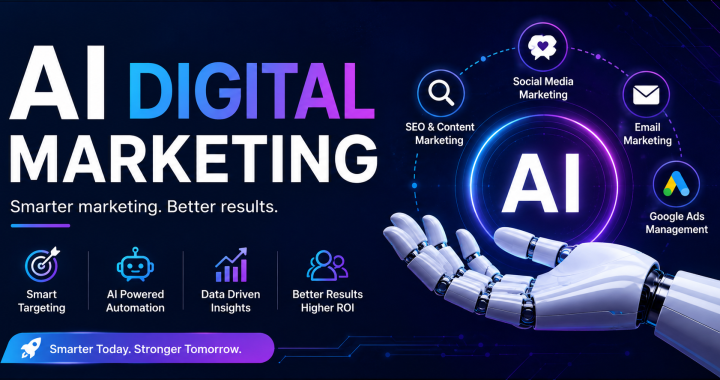
Artificial Intelligence (AI) is transforming digital marketing faster than ever in 2026. Businesses of all sizes are using AI to improve customer experiences, save time, and create smarter marketing campaigns. From content writing and email marketing to customer support and data analysis, AI helps marketers work more efficiently and achieve better results.

Today, many AI tools can create blog posts, generate social media captions, design images, analyze customer behavior, and even predict future trends. This allows businesses to make faster decisions and deliver personalized content to their audience. AI-powered chatbots also provide instant support, improving customer satisfaction and increasing engagement.

Another major trend is marketing automation. AI can automatically send emails, schedule social media posts, recommend products, and optimize advertising campaigns based on user behavior. These smart strategies help businesses reach the right people at the right time while reducing manual work.

Although AI is changing digital marketing, human creativity and strategic thinking remain essential. The best results come from combining AI technology with original ideas and a deep understanding of customer needs. Businesses that use AI wisely can improve productivity, increase conversions, and stay ahead of their competitors in the fast-changing digital world.

Artificial Intelligence (AI) has become one of the biggest drivers of change in digital marketing. In 2026, businesses are using AI to create smarter campaigns, understand customer behavior, and improve marketing results. AI tools can quickly analyze large amounts of data, helping marketers discover what their audience likes and how they interact with content online.

Modern AI-powered tools assist with writing blog posts, generating social media content, creating ad copy, editing images, and automating email campaigns. They also help businesses identify the best time to post content, choose the right keywords, and improve website performance. This allows marketers to save time while focusing on creativity and business growth.

One of the biggest trends is personalized marketing. AI studies customer preferences and delivers customized product recommendations, emails, and advertisements. This creates a better user experience and increases the chances of converting visitors into loyal customers.

While AI is making digital marketing faster and more efficient, it works best when combined with human creativity and strategic thinking. Businesses that use AI responsibly can build stronger customer relationships, improve brand visibility, and stay competitive in the ever-changing digital world

Artificial Intelligence (AI) is reshaping the way businesses promote their products and services online. In 2026, AI is no longer just a new technology—it has become an important part of everyday digital marketing. It helps businesses work faster, understand customers better, and create more effective marketing campaigns.

AI-powered tools can assist with content writing, keyword research, social media planning, email marketing, and customer support. Instead of spending hours on repetitive tasks, marketers can use AI to save time and focus on creative ideas and business growth. AI also analyzes customer behavior, making it easier to deliver personalized recommendations and relevant advertisements that improve customer engagement.

Another major trend is smart marketing automation. AI can schedule posts, send personalized emails, track campaign performance, and provide useful reports in real time. These features help businesses make better decisions and improve their marketing results without increasing their workload.

Although AI is a powerful tool, it cannot replace human creativity, emotions, and strategic thinking. The best digital marketing campaigns are created when AI supports marketers rather than replacing them. Businesses that combine AI technology with original content, valuable information, and a customer-first approach can build stronger brands, increase online visibility, and stay ahead in the competitive digital marketplace.

Artificial Intelligence (AI) is changing digital marketing by helping businesses work smarter and connect with customers more effectively. In 2026, AI is being used by startups, small businesses, and large companies to improve marketing performance and save valuable time. Instead of relying only on manual work, marketers can use AI to make faster decisions and create better customer experiences.

Continue reading→