A software company once spent months improving their landing page, convinced that was where they were losing customers. After finally mapping the entire customer experience from start to finish, they discovered the real problem was buried three steps later, in a confusing account setup process nobody on the marketing team had ever actually walked through themselves. Fixing the landing page would have changed nothing. Seeing the full journey changed everything.
We just explored how A/B testing helps improve individual elements. Now let’s zoom out and look at the bigger picture those individual tests often live inside — the complete path a customer travels from first contact to loyal, repeat buyer.
What Customer Journey Mapping Actually Is
Customer journey mapping is the process of visually laying out every stage a customer goes through when interacting with your brand — from the very first moment they become aware you exist, through consideration, purchase, and beyond.
Rather than focusing on a single touchpoint like a webpage or an ad, journey mapping captures the entire experience as one connected story, revealing exactly where things flow smoothly and where friction quietly builds up.
Why This Exercise Matters So Much
Teams often become deeply familiar with their own specific piece of the puzzle — a marketer knows the ad campaign inside out, a designer knows the website deeply, a support team knows common customer complaints. But rarely does anyone step back and experience the entire journey exactly as a real customer would, start to finish.
This narrow view creates blind spots. A beautifully designed ad might drive genuine interest, only for that momentum to die at a confusing sign-up form nobody on the ad team ever noticed existed.
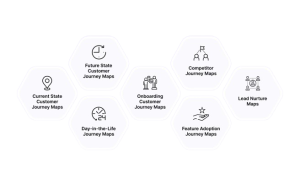
The Typical Stages Covered in a Journey Map Awareness — How does someone first discover your brand? A social media post, a friend’s recommendation, a search result?
Consideration — What do they explore next? Your website, reviews, comparisons with competitors?
Decision — What finally convinces them to commit — pricing clarity, trust signals, a specific persuasive detail?
Onboarding or first use — What happens immediately after purchase? Is the experience smooth, confusing, delightful, frustrating?
Ongoing use or loyalty — Do they return, recommend you to others, or quietly drift away after the initial purchase?
Mapping each of these stages honestly, from the customer’s actual perspective rather than an internal assumption, often reveals surprising gaps.
How to Actually Build a Journey Map
Step 1: Define a specific customer type. Rather than mapping a vague, generic “everyone,” focus on one realistic type of customer with a clear starting point and goal.
Step 2: List every touchpoint they encounter. Every ad, webpage, email, support interaction, or product experience that customer might pass through, in order.
Step 3: Identify their goal and mindset at each stage. What are they trying to accomplish, and what questions or doubts might be running through their mind at that specific point?
Step 4: Spot friction points honestly. Where might confusion, frustration, or unnecessary delay realistically occur? This step often requires genuinely experiencing your own process as a customer would, rather than relying on assumption.
Step 5: Identify improvement opportunities. Once friction points are visible, prioritize fixing the ones causing the most significant drop-off first.
A Simple Example
Imagine an online course platform mapping the journey of someone interested in learning graphic design.
Awareness: They discover the platform through a YouTube ad showcasing student projects.
Consideration: They browse the course page, read a few reviews, and check the syllabus.
Decision: Seeing a clear beginner-friendly promise and a reasonable price convinces them to enroll.
Onboarding: After purchasing, they’re dropped straight into Lesson One, with no clear welcome message or guidance on where to start, leaving them slightly confused about pacing and expectations.
Ongoing use: Because that confusing start left a slightly negative impression, they complete the course but never explore other offerings from the same platform.
By mapping this out, the company realizes their marketing and sales process works beautifully — awareness, consideration, and decision are all strong. The real weakness lives in onboarding, an area the marketing team had never closely examined, since it technically falls outside typical “marketing” responsibilities.
Common Mistakes When Mapping a Customer Journey
Mapping from an internal, company-centered view rather than the customer’s actual experience. It’s easy to describe what your team intends to happen at each stage, rather than what genuinely happens from the customer’s perspective.
Focusing only on the path toward purchase, ignoring what happens afterward. Onboarding, ongoing use, and loyalty stages are just as important as the initial sale, especially for subscription or repeat-purchase businesses.
Assuming one journey fits every customer type. Different customer segments often take meaningfully different paths, with different concerns and touchpoints along the way.
Creating the map once and never revisiting it. Customer behavior and expectations shift over time, meaning journey maps benefit from periodic review and updates.
Why This Exercise Pays Off Long-Term
Customer journey mapping forces a shift in perspective — Teams in charge of marketing, sales, products, and support usually only see the client through their particular touchpoint. By bringing different departments together under a common visual reference point, journey mapping increases the visibility of handoffs, dependencies, and communication gaps. Internal teams frequently believe that the consumer will receive the same experience that they provide. By displaying the precise times a user struggles—moments that are often missed by conventional metric tracking—a map bridges this gap. This mapping compels teams to give priority to high-emotion and high-effort touchpoints rather than treating every connection equally. It demonstrates how a small fix may turn annoyance into brand loyalty. from viewing your business through your own internal departments, to viewing it as one continuous, connected experience through the customer’s eyes. That shift alone often reveals opportunities that isolated fixes, like a single A/B test or an isolated marketing campaign, would never surface on their own.
What’s Next?
Understanding the full journey reveals where friction exists. The next logical step is actively working to reduce that friction wherever it appears, turning more visitors into paying customers. In our next post, we’ll explore conversion rate optimization, and how small, deliberate changes across a website can meaningfully improve results.
Influencer Marketing 101: Micro vs Macro Influencers
A skincare brand once sent free products to a celebrity with millions of followers and barely saw a single sale come through. That same brand later partnered with a handful of smaller creators, each with just a few thousand genuinely engaged followers, and watched their product sell out within days. Bigger isn’t automatically better in influencer marketing — and understanding why is exactly what this post is about.
We’ve just explored how personal branding builds trust and loyalty. Now let’s look at how brands often tap into that already-established trust through influencer partnerships, and why choosing the right size of influencer matters more than most beginners realize.
What Influencer Marketing Actually Is
Influencer marketing is a strategy where a brand partners with someone who already has an engaged audience, asking them to promote a product or service to that audience — usually in exchange for payment, free products, or a commission on resulting sales.
The core idea is simple: instead of building trust with a new audience from scratch, a brand borrows the trust an influencer has already earned with their existing followers.
What Is the True Distinction Between Micro and Macro Influencers?
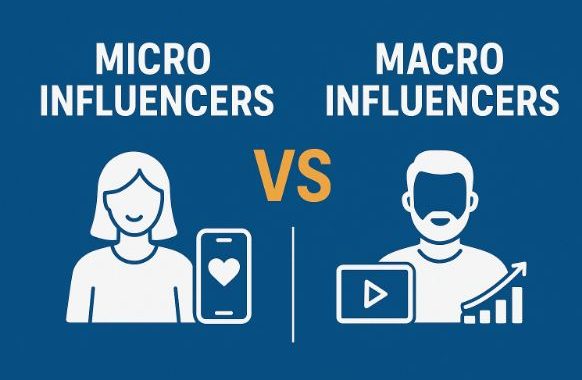
Micro influencers typically have smaller, tightly engaged audiences — often ranging from a few thousand to around 100,000 followers. Their strength lies in closeness: their audience often feels like they genuinely know them, leading to higher trust and engagement per follower.
Macro influencers have significantly larger audiences, often in the hundreds of thousands or millions. Their strength lies in sheer reach: a single post can expose a brand to a massive number of people at once, even if the relationship feels slightly less personal.
Neither type is inherently superior — they simply serve different goals, budgets, and stages of brand growth.
Why Micro Influencers Often Outperform Expectations
It might seem logical to assume more followers always means more results, but engagement doesn’t scale the same way audience size does. As an influencer’s following grows into the millions, the relationship with each individual follower often becomes more distant, and engagement rates — comments, saves, genuine trust — frequently drop as a percentage of total audience.
Micro influencers, on the other hand, often maintain a much closer, more conversational relationship with their audience. A recommendation from someone who feels like a genuine peer or friend tends to carry more persuasive weight than a polished endorsement from a distant celebrity.
Why Macro Influencers Still Matter
Despite this, macro influencers remain incredibly valuable for goals centered around broad visibility rather than deep, personal trust. Launching a brand-new product to a wide audience quickly, building general awareness, or reaching an entirely new demographic often benefits enormously from the sheer scale a macro influencer provides.
The key is matching the influencer’s strength to the actual goal — awareness and reach favor macro influencers, while trust and conversion often favor micro influencers.
A Simple Comparison
Budget: Micro influencers are typically far more affordable, sometimes working in exchange for free products alone. Macro influencers usually require significant payment, reflecting their large reach.
Engagement quality: Micro influencers often produce higher engagement rates relative to their audience size. Macro influencers may generate more total engagement, but at a lower rate per follower.
Content authenticity: Micro influencer content often feels more personal and less scripted. Macro influencer content, especially from top-tier creators, can sometimes feel more polished and promotional.
Audience trust level: Micro influencer audiences frequently feel a closer, near-friendship level of trust. Macro influencer audiences may view the creator more as a distant public figure.
A Practical Example
Imagine a small skincare brand with a limited marketing budget. Partnering with ten different micro influencers, each within a specific niche like sensitive skin or natural beauty routines, often generates far more genuine trust, relevant traffic, and eventual sales than paying for a single expensive macro influencer post — especially when the macro influencer’s audience isn’t specifically interested in skincare at all.
On the other hand, a large company launching a well-known product nationally might benefit more from a macro influencer’s broad reach, simply to build widespread recognition quickly, even if individual engagement rates are lower.
How to Pick the Best Fit for Your Brand
Ask what your actual goal is. Are you trying to build broad awareness, or drive genuine, trust-based conversions? Your answer should heavily influence which type of influencer makes more sense.
Consider your budget realistically. Several smaller micro influencer partnerships can often be more cost-effective than a single large macro influencer campaign, especially for beginners or smaller brands.
Prioritize relevance over raw numbers. An influencer whose audience genuinely overlaps with your target customer, even at a smaller scale, often outperforms a larger but less relevant audience.
Look at engagement, not just follower count. A small audience that actively comments, saves, and shares content is often far more valuable than a large but passive, disengaged following.
Common Myths Worth Clearing Up
“More followers always means more sales.”
Follower count reflects reach, not necessarily trust or purchasing intent. Engagement and relevance often matter far more for actual conversions.
“When compared to more well-known figures, micro influencers are not worth the effort.
Many brands have found the opposite true, particularly for niche products where genuine trust matters more than broad visibility.
“Influencer marketing is only effective for large, well-funded companies. Audiences trust influencers, but standard brand messaging is often seen with scepticism. When a creator recommends a product, followers see it as a genuine peer recommendation, which significantly enhances the company’s reputation.. Big corporations utilise influencers to target particular areas (like tech, beauty, or fitness) rather than going broad. By doing this, marketing funds are guaranteed to reach consumers who are already considering the brand’s offerings.
Even a modest budget, thoughtfully spent on a handful of relevant micro influencers, can produce meaningful results for smaller businesses.
What’s Next?
Influencer marketing shows how trust can be borrowed from individuals with existing audiences. But there’s another, quieter way brands build lasting trust and growth —by nurturing their own community directly. In the next post, we’ll explore community-led growth, and why it’s becoming one of the most valuable long-term strategies brands are investing in.
Platform Algorithms Explained: Instagram vs YouTube vs LinkedIn
A joke that lands perfectly on Instagram might completely flop on LinkedIn. A video that thrives on YouTube might get almost no traction if posted the exact same way on Instagram. Creators often assume this comes down to audience taste alone — but a huge part of it comes down to how differently each platform’s algorithm actually works behind the scenes.
We just covered how a content calendar helps you plan what to post. Now let’s look at what happens after you hit publish — specifically, how three of the most widely used platforms decide who actually sees your content.
What Is an Algorithm, in Simple Terms?
An algorithm, in this context, is a set of automated rules a platform uses to decide which content gets shown to which users, and in what order. It’s constantly evaluating signals — how long someone watches, what they comment on, what they skip past — to predict what a specific user is likely to enjoy seeing next.
No algorithm is designed to be unfair or mysterious for its own sake. Each one is built around a specific goal: keeping people engaged and returning to the platform. Understanding that underlying goal helps explain a lot of behavior that otherwise feels random.
Instagram: Built Around Interest, Not Just Followers
Instagram’s algorithm doesn’t primarily show content based on who you follow, in strict chronological order. Instead, it prioritizes what it believes you’re personally interested in, based on your past behavior — likes, saves, comments, watch time on similar content.
This means a stranger’s reel can outperform a close friend’s post in your feed, simply because the algorithm predicts you’re more likely to enjoy it.
What tends to help here: Content that earns saves and shares tends to be rewarded heavily, since Instagram interprets those actions as strong signals of genuine value, not just casual interest.
A key mindset shift: Instagram increasingly behaves like a discovery platform, not just a place to reach your existing followers. Growth often comes from reaching brand-new viewers who’ve never seen your page before.
YouTube: Built Around Watch Time
YouTube’s algorithm places enormous weight on one specific signal: how long people actually watch a video, and whether they stick around instead of clicking away early.
For this reason, a video’s opening moments are crucial. If a large portion of viewers drop off immediately, YouTube interprets that as a sign the content isn’t delivering on its promise, and reduces how widely it’s recommended afterward.
What tends to help here: Strong hooks in the opening seconds, clear thumbnails and titles that accurately represent the content, and pacing that keeps viewers engaged rather than dragging.
A key mindset shift: YouTube rewards patience and consistency far more than short-term virality. A well-performing video can continue getting recommended for months or even years after it’s published, unlike more short-lived formats on other platforms.
LinkedIn: Built Around Professional Relevance and Conversation
LinkedIn’s algorithm leans heavily toward content that sparks genuine discussion within a professional context — thoughtful comments, shares among relevant industry circles, and engagement from people within similar fields.
Unlike Instagram or YouTube, LinkedIn tends to favor written insight, personal stories tied to professional growth, and opinions that spark meaningful discussion over polished, highly produced content.
What tends to help here: Genuine, first-person insight — sharing an actual lesson learned, a mistake made, or an unpopular but well-reasoned opinion — tends to outperform overly promotional or generic posts.
A key mindset shift: Authenticity and depth are valued more on LinkedIn than polish. A post that is somewhat faulty but honest usually does better than one that is overly corporate and safe.
Why Understanding This Actually Matters
Many beginners create the exact same piece of content and post it identically across every platform, then feel confused when results vary wildly. Understanding what each algorithm actually prioritizes helps you adjust your approach — not necessarily creating entirely separate content for each platform, but shaping how you present and structure it differently.
A Simple Example Across All Three
Imagine someone sharing a story about switching careers into digital marketing.
On Instagram, this might become a visually engaging carousel post with a strong opening slide designed to earn saves, since career advice content tends to get bookmarked for later reference.
On YouTube, the same story might become a longer, narrative-driven video, with a compelling hook in the first ten seconds explaining why this story is worth sticking around for.
On LinkedIn, it might become a written post sharing a specific, honest lesson learned during that transition — something that invites other professionals to comment with their own similar experiences.
Same core story, three very different executions — each shaped around what actually earns visibility on that specific platform.
Common Myths Worth Clearing Up
“Algorithms are designed to suppress smaller creators.”
Algorithms generally aren’t designed around follower count directly — they respond to engagement signals, meaning smaller creators with genuinely engaging content can still be widely recommended.
“Frequency matters, but low-quality, rushed content posted often tends to underperform compared to fewer, genuinely well-crafted posts.
“It is useless to try to grasp the algorithm because it is always changing.” Data from users is fed into algorithms. Algorithms change to encourage new content kinds (e.g., switching from static photos to short-form video) if viewers grow weary of particular formats. Platforms are companies. By modifying organic reach, giving paid content priority, and encouraging users to read longer in order to display more advertisements, algorithm modifications contribute in their monetisation. Marketers and creators are always trying to “game” the system. In order to penalise strategies like keyword stuffing, engagement pods, and phoney accounts, platforms update their code.
While specific details shift over time, the underlying goals — keeping users engaged, matching content to genuine interest — tend to remain fairly stable across updates.
What’s Next?
Understanding how these platforms decide what to show is only halfthe picture.The other halfis understanding why people choose tofollow, trust, and stay loyal to certain creators over others in the first place. In the next post, we’ll explore personal branding — and why it matters more today than ever before.
Why Every Creator Needs a Content Calendar: An Overview
Somewhere out there right now, a creator is staring at their phone at 11 PM, panicking because they haven’t posted anything in four days and have absolutely no idea what to put up next. Then, a few accounts over, another creator has already scheduled next week’s content, knows exactly what’s going live tomorrow, and is spending their evening actually resting. The difference between these two people usually isn’t talent. It’s a content calendar.
This post kicks off a new stretch of our blog series, moving from digital marketing basics and AI tools into the world of social media and the creator economy. We’re starting with a tool that sounds almost too simple to matter — until you try running a page without one.
What a Content Calendar Actually Is
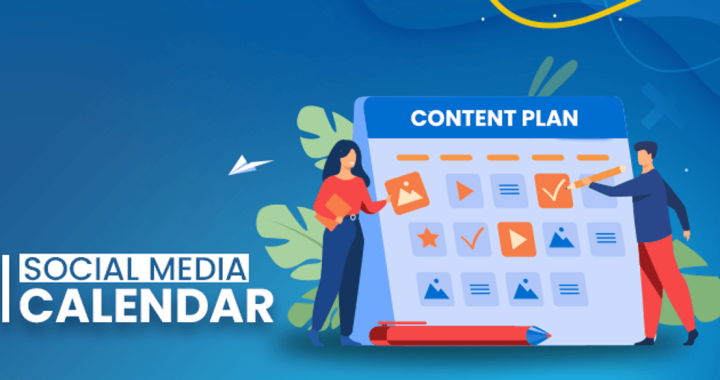
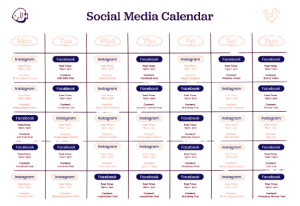
A content calendar is a planned schedule that maps out what you’ll post, where you’ll post it, and when — usually laid out across days, weeks, or months ahead of time.
Instead of deciding what to share the moment you open an app, everything is mapped out in advance: the topic, the format, the caption direction, sometimes even the exact publish time. It turns social media from a reactive scramble into a planned, intentional rhythm.
Why This Matters So Much More Than It Sounds
Posting without a plan often feels fine for the first week or two. Then reality sets in — busy days show up, motivation dips, and suddenly there’s a scramble to post something, anything, just to avoid going silent. That scramble almost always produces weaker content than something planned with a clear head.
A calendar solves several problems at once:
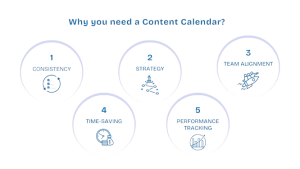
It removes daily decision fatigue. You’ve already decided what’s going up. There’s no scrambling for ideas in the moment.
It keeps your posting consistent. Platforms tend to reward accounts that show up regularly, and audiences build trust with creators who don’t randomly disappear for weeks.
It lets you plan around real-world moments. Holidays, product launches, seasonal trends — all of it is far easier to prepare for when you’re looking a month ahead instead of scrambling the morning of.
It reveals gaps and repetition. Without a visual layout, it’s easy to accidentally post the same type of content five times in a row, or forget an entire content type altogether.
What Goes Inside a Content Calendar
A simple, beginner-friendly content calendar usually includes:
The date and platform — when it’s going live, and where (Instagram, YouTube, LinkedIn, etc.)
The content type — a reel, a carousel post, a written update, a video
The core topic or hook — the main idea or angle the post revolves around
The caption direction — a rough draft or key points, not necessarily the final polished text
A call-to-action — what you want the viewer to do afterward: comment, share, click a link, save the post
You don’t need fancy software to start. For novices, a straightforward spreadsheet or simply a notebook broken up into weeks is ideal.
A Real Example of How This Plays Out
Imagine someone managing a modest Instagram feed dedicated to plant maintenance.. Without a calendar, she might post whenever she remembers, often repeating similar “watering tips” content because it’s the easiest thing to think of on the spot.
With a calendar, she instead maps out a full month ahead: Mondays are quick care tips, Wednesdays feature a specific plant spotlight, and Fridays are for community questions pulled from her comments. Suddenly, her page feels structured, varied, and far more engaging — not because she suddenly became more creative, but because planning gave her creativity room to actually show up.
Common Mistakes Beginners Make
Overplanning too rigidly. A calendar ought to direct you rather than ensnare you.. If something timely or trending comes up, it’s fine to swap a planned post for something more relevant in the moment.
Only planning topics, never formats. Repeating the exact same post style — always a static image, for instance — tends to bore an audience faster than varying between reels, carousels, and text posts.
Ignoring performance data. A “set it and forget it” approach is not appropriate for a calendar. document. Revisiting what actually performed well helps you adjust future weeks more intelligently.
Building it once and never revisiting it. The best calendars evolve — noticing patterns, dropping what doesn’t work, and doubling down on what genuinely resonates with your specific audience.
How to Build Your First Content Calendar
Step 1: Pick a timeframe to start with — a single week is plenty for beginners, rather than attempting an entire quarter right away.
Step 2: List your platforms and how often you realistically want to post on each.
Step 3: Brainstorm rough topics or themes for each planned post, keeping a mix of formats in mind.
Step 4: Fill in specific dates, leaving room for flexibility if something timely comes up.
Step 5: Review afterward — what performed well, what felt like a struggle to create, and adjust your next round accordingly.
Why This Skill Carries Weight Beyond Just Posting
A content calendar isn’t just an organizational trick — it reflects a deeper shift in mindset, from reacting moment-to-moment to building with intention. Creators who plan ahead tend to build stronger, more recognizable identities over time, simply because their content has room to be thought through rather than rushed. Create three to four recurring pillars for your calendar, such as 40% education, 30% entertainment, 20% behind-the-scenes, and 10% community. To establish a consistent visual style, set aside particular days to script, shoot, and edit content in large quantities. Set a sustainable pace (e.g., three shorts each week, one long-form video every two weeks) to avoid sudden, identity-damaging absences.. Determine how a single anchor piece of material may be safely translated into text, audio, or short-form video for many platforms without weakening the main point.What’s Next?
Now that you have a system for planning what to post, the next natural question becomes:how do these platforms actually decide who sees it? In the next post, we’ll pull back the curtain on how Instagram, YouTube, and LinkedIn each handle their algorithms differently — and what that means for your content strategy.
How AI Is Changing SEO: Answer Engines vs Search Engine
Try this experiment next time you’re curious about something: instead of typing your question into Google, ask an AI assistant instead. Notice how you often get a direct, conversational answer immediately, without needing to click through to a single website. That small shift in behavior represents one of the biggest changes in the history of online search.
In our last post, we broke down what generative AI actually is. Now let’s look at how it’s reshaping the very foundation of SEO — a topic we covered earlier in this series.
How Do Search and Answer Engines Differ?
Traditional search engines, like Google or Bing, work by showing you a list of relevant links, letting you choose which website to visit and read for your answer. You do the clicking, the comparing, and the reading.
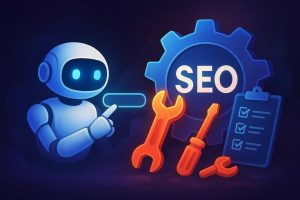
Answer engines, powered by generative AI, work differently. Instead of handing you a list of links, they read across multiple sources themselves and generate a direct, conversational answer right there, often without requiring you to visit any website at all.
Think of the difference this way: a traditional search engine is like a librarian pointing you toward five different books on a shelf. An answer engine is like a well-read assistant who has already read all five books and gives you a summarized answer, on the spot.
Why This Shift Is Such a Big Deal for Marketers
For years, SEO’s main goal was simple: rank high enough on Google’s results page that people click through to your website. That click was the whole game — more clicks generally meant more traffic, more visibility, and more potential customers.
But when an AI-powered answer engine gives someone a complete answer without sending them to any website, that click may never happen at all. This means visibility is no longer just about ranking on a page — it’s increasingly about being the source an AI system chooses to pull its answer from in the first place.
How AI Search Actually Decides What to Reference
While every platform works slightly differently, most AI-powered search tools follow a similar general pattern:
They still rely on crawled, indexed content. AI systems aren’t magically inventing answers from nothing — many pull from real, existing web content, similar to how traditional search engines discover pages.
They favor clear, well-structured information. Content that directly and clearly answers a specific question tends to get pulled into AI-generated summaries more easily than vague, scattered writing.
They value credibility and consistency. Just like traditional SEO rewards trustworthy websites, AI-driven answer engines tend to lean on sources that appear consistently reliable and well-established.
What This Means for How You Write Content Going Forward
This doesn’t mean traditional SEO is disappearing — it means it’s evolving to serve two audiences at once: human readers browsing search results, and AI systems scanning content to generate their own summarized answers.
A few practical shifts worth keeping in mind:
Answer the core question early and clearly. Rather than building up slowly to your main point, state the direct answer near the top of your content, then expand with detail afterward. AI systems tend to favor content that gets straight to the point.
Structure content clearly, with headers and short sections. Just like human readers skim content, AI systems tend to extract information more easily from well-organized, clearly labeled sections.
Focus on genuine depth and accuracy. As more generic AI-generated content floods the internet, uniquely detailed, well-researched, and genuinely helpful writing stands out even more than before.
A Simple Example
Imagine someone asks an AI assistant, “What’s the difference between soy wax and paraffin candles?”
If your blog has a clearly written, well-structured post directly answering that exact question — with a clear explanation near the top, not buried under paragraphs of unrelated introduction — there’s a stronger chance an AI system references or draws from your content when generating its answer.
Compare that to a blog post that talks broadly around the topic for several paragraphs before finally answering the actual question. Even if it’s well-written, its structure makes it harder for both readers and AI systems to quickly extract the specific answer.
Is Traditional SEO Becoming Useless?
Not at all — but it is becoming incomplete on its own. Many people still click through traditional search results, especially for more complex research, shopping decisions, or comparisons. Answer engines are becoming an additional, increasingly important channel, not a full replacement for traditional search.
The smartest approach is treating your content as something that needs to work well for both systems simultaneously — genuinely useful and easy to read for a human, while also clearly structured enough for an AI system to understand and reference accurately.
Common Myths Worth Addressing
“AI search means SEO is dead.”
SEO is changing, not disappearing. The core principle — creating genuinely useful, well-structured, trustworthy content — still applies; it’s simply being read by both humans and AI systems now.
“You need special tools to optimize for AI search.”
While specialized tools are emerging, the fundamentals remain surprisingly similar to good SEO practice: clarity, structure, depth, and accuracy.
Smaller, highly specific, genuinely well-written content can absolutely get pulled into AI-generated answers, especially in niche topics where big websites haven’t gone into as much depth. AI models make cross-references between statements from various sources. A claim made just on your website can be deemed unconfirmed by the AI. The informational depth that AI crawlers seek is absent from a one-page, superficial website. Websites with distinct heading structures and linked pages are preferred. Many AI models lack “real-time” memory for younger, smaller domains unless they are directly queried, and thus have static training knowledge cutoffs.
What’s Next?
Now that you understand how AI is reshaping search itself, it’s worth stepping back to a more practical skill — how do you actually communicate effectively with these AI tools to get genuinely useful results ?In the next post, we’ll break down the basics of AI prompting, so you can start getting far better output from tools like Chat GPT and Claude
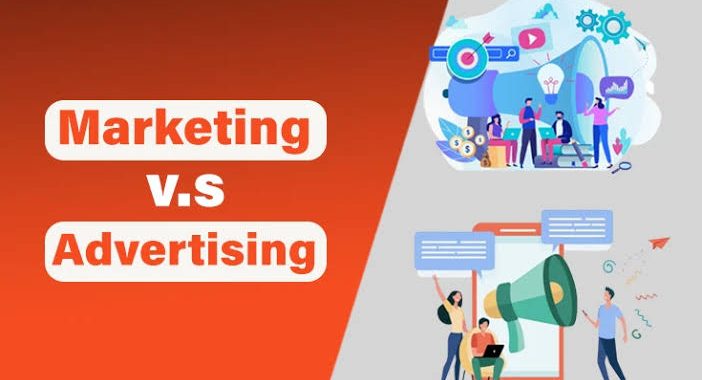
Content Marketing vs Advertising: What’s the Real Difference?
Have you ever scrolled past a loud, obvious ad without a second thought, but stopped to read an interesting article or watch a genuinely helpful video — only to realize later it was posted by a brand? That reaction, that difference in how you responded, is the entire distinction between content marketing and advertising.
We’ve covered digital marketing basics, SEO, paid versus organic growth, and the marketing funnel. Now let’s clear up one of the most confused pairs of terms in the entire industry.
What Is Content Marketing?
Content marketing is the practice of creating genuinely valuable, relevant, or entertaining material — blog posts, videos, guides, podcasts, infographics — with the goal of attracting and building trust with an audience, rather than directly asking them to buy something.
The sale isn’t the first move. The value is. Trust and buying decisions follow naturally, often later.
What Is Advertising?
Advertising is a direct, paid message designed to promote a product or service, usually with a clear and immediate call-to-action, like “Buy now,” “Sign up today,” or “Limited time offer.”
Unlike content marketing, advertising doesn’t try to slowly earn attention — it buys it directly, and usually asks for something in return almost immediately.
The Core Difference, Explained Simply
Imagine two people at a party.
One person spends the evening genuinely getting to know others — asking questions, sharing helpful advice, being interesting to talk to. By the end of the night, people like them and want to stay in touch. That’s content marketing — value first, relationship building, sale later (if at all, directly).
The other person walks around handing out business cards to everyone, repeating “buy my product” to anyone who’ll listen. It might work on a few people who happened to need exactly that product right then — but most people will politely step away. That’s advertising — direct, immediate, but often less personally engaging.
Neither approach is wrong at a party — or in marketing. They just create very different types of relationships, at very different speeds.
Comparing the Two, Side by Side
Purpose
Content marketing aims to inform, entertain, or educate. The goal of advertising is to actively market and sell.
Timeframe
Content marketing plays a long game, often taking weeks or months to build trust and traffic. Advertising delivers instant visibility the moment it goes live.
Cost structure :
Content marketing costs,time and creative effort, without a direct per-view payment. Advertising typically involves paying for every impression, click, or view.
Trust factor
Content marketing tends to build deeper trust, since it doesn’t feel like a hard sell. Since the intention to sell is clear and direct, advertising may seem more transactional.
Longevity
A great piece of content marketing, like a well-written blog post, can keep attracting an audience for years. An ad campaign stops delivering the moment the budget runs out.
Why This Confusion Happens So Often
Many beginners assume content marketing and advertising are competing strategies, when in reality, they’re simply different tools solving different problems.
Advertising is fantastic when you need quick visibility, are launching something time-sensitive, or want to directly reach a specific audience you’ve already identified.
Content marketing is fantastic when you’re building a long-term brand, want to earn trust before asking for a sale, or are trying to educate a market that doesn’t fully understand your product yet.
The confusion mostly comes from the fact that content can become advertising too — for example, a sponsored blog post or a paid influencer video blends both approaches into one.
A Real-World Example, Side by Side
Let’s return to the candle brand one final time, comparing how the same product might be marketed through each approach.
Through content marketing: The brand publishes a genuinely useful blog post titled “5 Signs You’re Using the Wrong Candle for Your Bedroom,” subtly mentioning their own products as examples, without a direct sales pitch. Readers find it helpful, trust builds, and some naturally explore the brand’s shop afterward.
Through advertising: The same brand runs a direct Instagram ad showing the candle with the text: “Cozy your home this winter — 20% off today only.” It’s straightforward, immediate, and intended to swiftly convert individuals who are already inclined to make a purchase.
Notice neither approach is better — they’re simply built for different moments in a customer’s journey, echoing the funnel stages we covered in the last post.
When Should You Use Which?
Choose content marketing when:
You’re building long-term brand trust and authority.
Your audience doesn’t fully understand your product yet and needs education first.
You have more time than budget to invest.
Choose advertising when:
You need visibility or sales quickly.
You’re testing a new offer or message and want fast feedback.
You already have proven, high-converting content or products you want to amplify.
The Smartest Approach: Blend Both
Just like paid and organic marketing work best together, content marketing and advertising often achieve more when combined rather than treated as rivals.
A common, effective approach: create genuinely valuable content first, then use a small advertising budget to boost that content’s reach to a wider, relevant audience — combining the deep trust of content with the speed of advertising.
Common Myths Worth Clearing Up
Posting without a clear purpose or audience in mind rarely builds meaningful traction. Good content marketing is just as strategic as advertising, simply slower to show results.
“Advertising is only for big brands with big budgets.”
Even a small, well-targeted ad budget can meaningfully move the needle for a small business, especially when paired with genuinely strong content behind it.
“You have to choose one as your permanent identity.”
Nearly every successful brand uses both, adjusting the balance depending on their current goals, budget, and stage of growth.
Wrapping Up This Series
Over these five posts, you’ve now walked through the essential foundations of digital marketing — what it is, how SEO helps you get discovered, the difference between paid and organic growth, how the marketing funnel guides a stranger toward becoming a customer, and finally, how content marketing and advertising each play their own distinct role in that journey.
Together, these fundamentals form the backbone of nearly every successful digital strategy you’ll come across — no matter how advanced or complex it eventually seems on the surface. Understanding these basics deeply is what separates people who just follow trends from those who genuinely understand why those trends work in the first place.
Paid vs Organic Marketing: Where Should Beginners Start?
If you’ve ever felt torn between “should I run ads?” and “should I just focus on growing naturally?” — you’re asking one of the most common questions in digital marketing. And the honest answer isn’t as simple as picking a side. It’s about understanding what each approach actually does, and when to lean on which one.
In our last two posts, we covered what digital marketing is and how SEO helps you get found organically. Today, we’re addressing the debate that trips up nearly every beginner: paid marketing versus organic marketing.
What Do “Paid” and “Organic” Actually Mean?
Organic marketing refers to any traffic or attention you earn without directly paying for placement — think SEO, social media posts, word of mouth, or content marketing. It grows naturally over time, built on relevance and trust.
Paid marketing refers to traffic or visibility you buy directly — search ads, social media ads, sponsored posts, or influencer partnerships you pay for. The moment your budget stops, so does the visibility.
Neither one is inherently “better.” They simply serve different purposes, and the smartest marketers use both, at different stages, for different goals.
The Core Difference: Speed vs Sustainability
Here’s the simplest way to picture it:
Paid marketing is like renting a shop in a busy mall. The moment you pay rent, people walk past and notice you. The moment you stop paying, that visibility disappears completely.
Organic marketing is like building your own storefront on a street corner. It takes longer to construct, and foot traffic starts slow — but once it’s built and people know it’s there, it keeps bringing customers back, month after month, without an ongoing rental bill.
Neither is wrong. A brand-new business often needs the mall’s instant foot traffic to survive early on, while relying purely on organic growth alone can feel painfully slow. But over years, that self-owned storefront often becomes the more valuable, cost-efficient asset.
Paid Marketing: The Fast Lane
Paid marketing includes things like:
Google Ads (search and display)
Instagram and Facebook ads
YouTube pre-roll ads
Sponsored influencer posts
LinkedIn sponsored content
The biggest advantage of paid marketing is speed. You can launch a campaign this afternoon and start seeing traffic within hours. It’s also highly targeted — you can choose exactly who sees your ad, based on location, age, interests, or even browsing behavior.
The tradeoff is that it’s a rented spotlight. Stop paying, and your visibility vanishes overnight. It can also get expensive quickly, especially in competitive industries where many businesses are bidding for the same audience’s attention.
Organic Marketing: The Long Game
Organic marketing includes things like:
SEO-optimized blog content
Social media posts and community engagement
Email newsletters built from genuine subscribers
Word-of-mouth and referral growth
The biggest advantage here is durability. A well-written blog post or a genuinely useful video can keep attracting visitors for years without additional spending. It also tends to build deeper trust, since people know you weren’t paying to be in front of them — you earned that spot.
The tradeoff is time. Organic growth rarely happens overnight. It can take weeks or months of consistent effort before you start seeing meaningful traction.
A Simple Way to Decide Where to Start
Ask yourself these three questions:
1. Do I need results immediately, or can I invest in the long term?
If you’re launching a time-sensitive offer or a new product that needs visibility right now, paid marketing gets you there faster. If you’re building a brand meant to last years, organic deserves serious early investment.
2. What’s my budget?
If your budget is tight, organic marketing lets you grow using time and effort instead of cash. If you have some budget to test with, even a small, well-targeted ad spend can help you learn quickly what resonates with your audience.
3. Am I trying to test an idea, or scale a proven one?
Paid ads are excellent for quickly testing which message, image, or offer performs best. Once you know what works, organic content can help you scale that same message more sustainably.
The Beginner-Friendly Approach: Start Organic, Use Paid to Accelerate
For most beginners with limited budgets, a hybrid mindset works best
Step 1: Start building organic assets early — a blog, a social media presence, an email list. These take time to grow, so the earlier you start, the better.
Step 2: Once you notice which content or offers naturally perform well organically, put a small paid budget behind those proven winners to accelerate their reach.
Step 3: Reinvest what you learn from paid campaigns — which headlines work, which images get clicks — back into your organic content strategy.
This way, paid and organic aren’t competing strategies. They’re feeding each other.
A Real-World Example
Let’s return to our handmade candle business one more time. Early on, with a small budget, the owner starts a blog covering home fragrance tips — pure organic content, slow but free.
A few months in, one post about “cozy autumn scents” starts getting noticeable traffic on its own. Seeing this early signal, she puts a small ad budget behind that same topic, promoting it to a wider, similar audience. The ad performs well because the organic content already proved people cared about it.
That’s the paid-organic loop working exactly as intended — each one making the other stronger.
Common Myths Worth Clearing Up
“Paid ads guarantee sales.”
Ads bring visibility and clicks, not automatic sales. Without a good offer, website, or clear message, paid traffic can disappear without converting into customers.
“Organic marketing is completely free.”
Organic isn’t free — it costs time, consistency, and effort, which are resources too. It’s “unpaid” in the direct financial sense, not effortless.
“You have to pick one and stick with it forever.”
Most successful brands blend both, adjusting the ratio depending on their goals, season, or budget at any given time.
What’s Next?
Whether someone finds you through a paid ad or an organic blog post, the real work has only just begun the moment they land on your page. That’s where the idea of a marketing funnel comes in — the journey that turns a curious stranger into a loyal customer. That’s exactly what we’ll unpack in the next post.